
Stop and Smell the Rosé: Exploring the Flavors of Provence


Provence. The name itself conjures up images of azure blue skies, golden fields of sunflowers, gnarled cypress trees reaching for the heavens, a seascape dotted with fishing vessels, and the pervasive bouquet of lavender, roses, and the sea. Nestled between the Rhône Valley, Italy, the Alps, and the Mediterranean, this is the land that offered inspiration to the likes of Cézanne and Van Gogh. Travelers and tourists of all stripes come to this magical part of the world to inhale deeply its beauty, tradition, and bounty.
But foreigners have been trampling this prized area for millennia. The Greeks founded Massilia, or Marseilles, planted vines that they brought with them, and fished the waters here as early as the 6th century B.C. The Romans arrived centuries later and stayed more than 600 years. They planted vineyards further inland and made a great deal of wine, exporting much of it back home. Indeed, the name Provence is derived from Provincia Romana and the Roman influence can be felt throughout the region, still dotted with Roman villas and precious antiquities. Provence had many centuries of independence, accounting for its aura of otherworldliness. It only became a part of France in 1481.
This is a very dynamic region in terms of the development of wine blends and styles, intensively working to continue to improve its quality and global reputation. Provence currently provides some of the best values among European wines, which are increasingly available in the U.S.
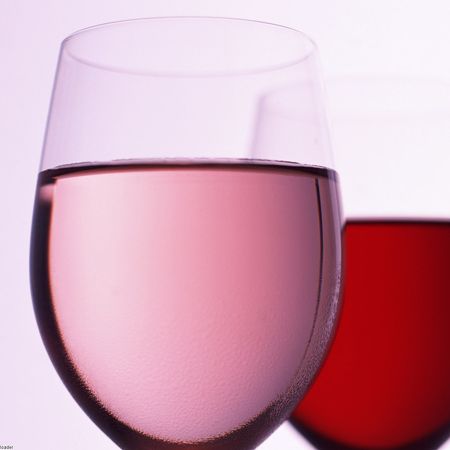
While one immediately thinks of a cool glass of rosé as a typical Provençal beverage, as it accounts for 80% of the region’s total wine production, there is a great deal more to be experienced. The climate is Mediterranean with mild winters and hot summers, producing very ripe fruit. The location of the individual vineyard is extremely important, as it determines the degree of influence of the hot sun, as well as the howling winds of the mistral.
Provence is an enormous wine-growing region, divided into seven Appellation Contrôlées, or appellations. Its largest, and the largest in France, is Côtes-du-Provence, extending over 35,000 acres. While more than 80% of the wine produced here is the tourist-friendly quaffing rosé, huge strides have been made over the past 10 years to improve the quality of the red wines, made from Grenache, Syrah, Cinsaut, Mourvèdre, and Cabernet Sauvignon. White wines are made from Ugni Blanc, Rolle, Clairette, Grenache Blanc, Bourboulenc, and Sémillon, all of which are often blended together with delightful results. Sauvignon Blanc is also gaining popularity in the region; its high acid, which produces a crisp wine, is a refreshing alternative to the comparatively rich, unctuous, oily-textured wines made from the more traditional white varieties.
Bandol is one of my all-time favorite appellations, producing some amazing, age-worthy wines of great character. With over 3,000 acres, this is one of the oldest appellations in France, declared in 1941. All of the windswept vineyards in Bandol face south, jealously guarding their rare domaine overlooking the Mediterranean. The varietal star of Bandol is Mourvèdre, whose grapes ripen late and provide naturally low yields. It’s mandated that red Bandols be oak-aged for at least 18 months. These amazing wines are monsters of concentrated fruit, complex meat and herbs notes, along with big, round tannins, all of which require cellaring for 5-10 years. Grenache, Cinsaut, Syrah, and Carignan are also grown in Bandol to add texture to both the red and rosé wines.
What to eat with these lovely wines? The wonderful foods of the region rely predominantly on the fish that is pulled from the local Mediterranean waters. Anchovies, red mullet, sea bream, shellfish galore, locally grown vegetables, herbs de Provence, and garlic all play enormous roles in the Provençal cuisine. Famed French foodie Curnonsky (a.k.a. Maurice Edmond Sailland) described Bouillabaisse, the best-known Provençal dish, as “the golden soup” because of the inclusion of saffron. I have tried to recreate this famed fish stew in my kitchen many times, but with lackluster results. I have since discovered that the secret is the access to the Mediterranean fishes.
As Provence is predominantly a mountainous region, without much access to dairy cows and rich farmlands, goat cheese is king. Soupe au pistou is made with late summer vegetables and includes garlic, fresh basil, and goat cheese. It provides a superb opportunity to indulge in a heartier rosé, which plays off the heat of the garlic and provides an ideal acidic foil to the richness of the cheese.
In the late afternoon, a generous slice of pissaladière with a glass of Bandol is a remarkable marriage that will make for years of heady memories. This onion tart, made with a potent mix of black olives and anchovy paste, completely speaks of the region and is divine when paired with Mourvèdre, lush with red fruits, herbs and earth, and able to handle the power of the savory flavors.
At a small auberge tucked into the Provençal hills, we placed our famished selves in the Chef’s hands. We sent him a glass of our 2002 Domaine Ott Rosé ‘Chateau de Selle’ for inspiration. He sent out freshly caught rouget, lightly poached in lemon, anchovy, butter, and white wine made with Grenache Blanc. The richness of this particular rosé played off the high notes of lemon beautifully, while the brightness of the wine’s fruit and acid was the perfect foil to the succulence of the fish and the savory anchovy notes.
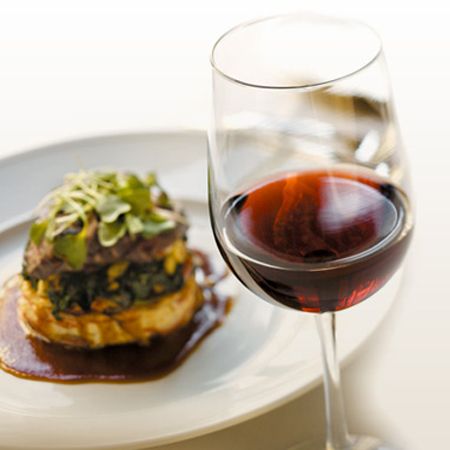
Next, the Chef chose locally raised lamb medallions, seared rare and topped with a sauce made from Bandol wine, veal stock and the juice of freshly-picked blackberries. Locally foraged mushrooms, just slightly heated with butter, shallots and garlic rounded out the plate. The 1991 Domaine Tempier Bandol Cuvee Speciale Cabassaou exhibited notes of blackberry, earth, game, sauvage, and dried herbs, mirroring the complex flavors on the plates in front of us. Having visited the small, terraced vineyard earlier, we knew it was sheltered from the Mistral, tucked into the lower area of La Tourtine. Its southern exposure allows for maximum sunlight for the Mourvèdre vines. Low grape yields make the Cabassaou a rare and exciting treat and a quintessentially Provençal experience.
Even with its complex range of big flavors and hearty textures, this is a cuisine that is clearly incomplete without a well-structured, full-flavored wine like those described above.
RECENT POSTS IN Food and Wine Articles